
Rubric
A rubric is a set of scoring guidelines for grading student work. When you give students a new assignment, you can also provide them with the assignment's rubric. This sets clear expectations, and makes the grading criteria transparent before students begin the work. Using a rubric also ensures that you use the same set of criteria to grade all of your students.
Recommended Rubric Resources
-
ASSESSMENT
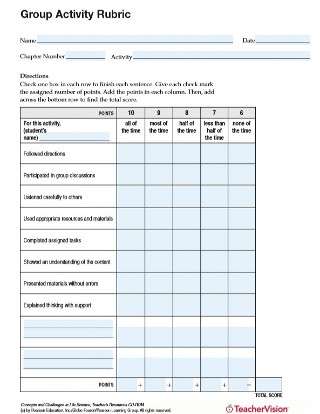
Group Activity Rubric
Evaluate students' participation and performance in a group activity with this customizable rubric. Tailor the PDF to yo... -
ASSESSMENT
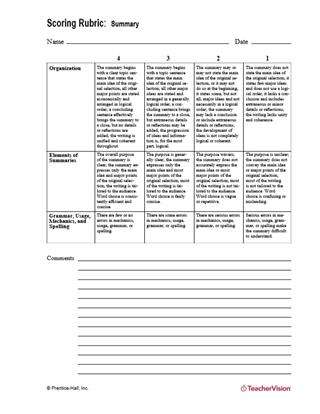
Scoring Rubric: Summary
An essential, must-have rubric for language arts classes The organization, elements of summaries, grammar, usage, mecha... -
ASSESSMENT
Pre-Reading Rubric and Score Sheet
-
ASSESSMENT
Cooperative Group Rubric
Distribute a rubric that allows you to evaluate students' performance on group projects. Use this scoring guide with "Mo... -
ASSESSMENT
Table Manners Scoring Rubric
-
ASSESSMENT
Analytic vs. Holistic Rubrics: Part Three in a Five-Part Series
Download for free! This article describes analytic and holistic rubrics and lists the advantages of each. Using the des... -
ASSESSMENT
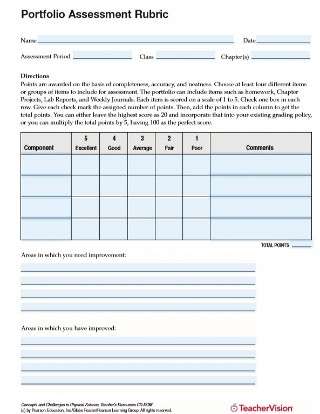
Portfolio Assessment Rubric
Evaluate performance over an extended period of time by incorporating portfolios in your student assessment. This custom... -
ASSESSMENT
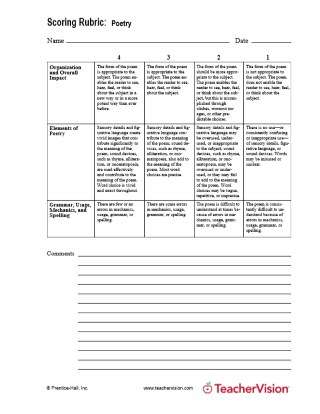
Scoring Rubric: Poetry
Use this rubric when you are having your students write their own poetry. Grading your students work will be easier with... -
ASSESSMENT
Individual Activity Rubric
This customizable rubric will help you to assess students' comprehension and performance for individual activities. The ... -
CLASSROOM TOOLS
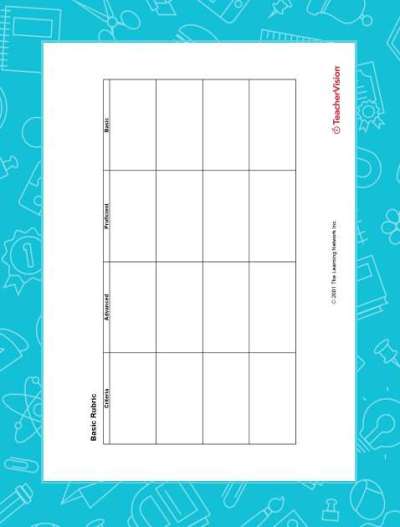
Blank Rubric
Can't find the right rubric? Make your own! This blank grid will make it easy for you to create your own rubrics. This ... -
ASSESSMENT
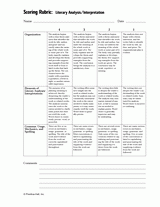
Scoring Rubric: Literary Analysis/Interpretation
The organization, elements of literary analysis/interpretation writing, grammar, usage, mechanics, and spelling of a wri... -

ASSESSMENT
Scoring Rubric: Comparison/Contrast
The organization, elements of comparison/contrast writing, grammar, usage, mechanics, and spelling of a written piece ar... -
ASSESSMENT
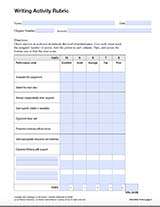
Writing Activity Rubric
This customizable rubric will help you assess your students' writing performance across your curriculum. The ten-point s... -
ASSESSMENT
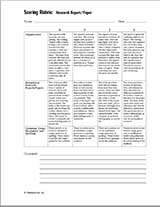
Scoring Rubric: Research Report/Paper
The organization, elements of research report/paper writing, grammar, usage, mechanics, and spelling of a written piece ... -
WORKSHEETS
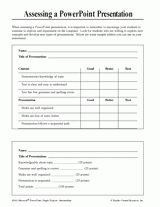
Assessing a PowerPoint Presentation
Use this guide to evaluate your students' PowerPoint slide shows and their presentations. Included in the packet is a sa... -
ASSESSMENT
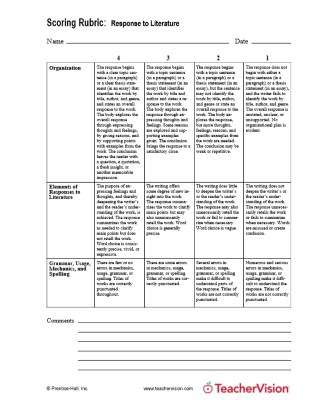
Scoring Rubric: Response to Literature
The organization, elements of response to literature writing, grammar, usage, mechanics, and spelling of a written piece... -
ASSESSMENT
Scoring Rubric: Resume and Cover Letter
The organization, elements of resume and cover letter writing, grammar, usage, mechanics, and spelling of a written piec... -
ASSESSMENT
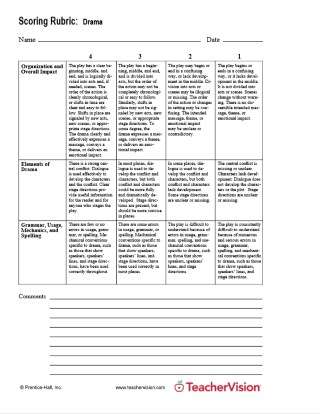
Scoring Rubric: Drama
The organization, elements of drama writing, grammar, usage, mechanics, and spelling of a written piece are scored in th... -
ASSESSMENT
Laboratory Activity Rubric
Assess students' performance level for scientific lab activities and lab reports with this rubric. The ten-point scale m... -
ASSESSMENT
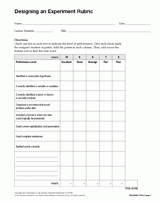
Designing an Experiment Rubric
Use this rubric to assess students' performance level in designing a scientific experiment. The ten-point scale makes it... -
CLASSROOM TOOLS
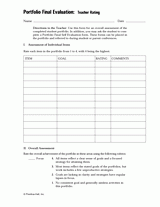
Portfolio Final Evaluation: Teacher Rating
Use this form to evaluate all kinds of portfolios. This printable is customizable. Tailor the PDF to your teaching needs... -
ASSESSMENT
Fiction-Writing Content Rubric
-
ASSESSMENT
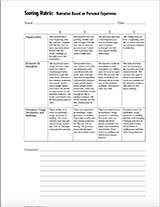
Scoring Rubric: Narrative Based on Personal Experiences
The organization, elements of narration, grammar, usage, mechanics, and spelling of a written piece are scored in this r... -
ASSESSMENT
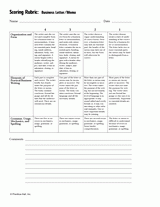
Scoring Rubric: Business Letter/Memo
The organization, elements of a business letter/memo writing, grammar, usage, mechanics, and spelling of a written piece...


