Rapunzel
by Paul O. Zelinsky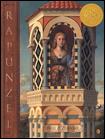
- For Grades Pre-K - 6
- Introduction
- Vocabulary
- Discussion Questions
- Extension Activities
- Buy this Book!
Enter promo code TEACH for 15% off.

 To read for entertainment (grades K-3)To discover art history sources for various pictures (grades 4-6)To absorb the atmosphere of Italian painting by discovering Renaissance sources for Rapunzel
 INTRODUCTION VOCABULARY 1. Page 5 a. What is the main idea of the first paragraph where the husband is placing his hand on his wife's abdomen? 2. Page 7 a. What is the main idea of the second and third paragraphs on page 7? 3. Page 9 a. What do you think would happen if the husband didn't get some Rapunzel for his wife? 4. Page 10 a. What did the husband trade for Rapunzel? 5. Pages 12-13 a. Notice how light and shadow create movement and direction in this picture. Why are there no words on this page? 6. Page 14 a. Do you think the sorceress is a good stepmother? 7. Page 15 8. Page 16 a. How is the tower like the wall described on page 9? (Wall had neither door nor gate. Tower had no door.) 9. Page 19 a. Why did the prince circle the tower 20 times? 10. Page 20 a. How did the prince get into the tower? 11. Page 22 a. How do you think the sorceress would have reacted if she knew that Rapunzel married the prince? 12. Page 25 13. Page 27 a. Why did the sorceress send Rapunzel away? 14. Page 29 a. Why does the sorceress tell the prince that Rapunzel is lost to him forever? Then what happens? 15. Page 30 a. How did the prince become blind? 16. Page 32 a. How did the prince find Rapunzel? 17. Page 35 a. How did the prince regain his sight? 18. Page 36 19. Cover [Art] a. Compare the cover to the Rembrandt painting "Agatha Bas" (1641). 1. Dramatize the story using a husband, wife, Rapunzel, sorceress, prince, and twins. Set the chant "Rapunzel, Rapunzel, let down your hair" to music. 2. List all the good qualities of the sorceress. 3. Create an advertisement for this book so that your friends will want to read it. 4. How would the book look different if it were set in India, in Africa, in the American Southwest, or in Russia? What would the longed-for herb be? What art history sources would you use? Design a tower using another art history source. 5. Make a diorama of the garden using a shoe box. Imagine various rooms that might be inside the tower. 6. Count from one to twenty by ones. Count from ten to one hundred by tens.
What is a fairy tale? What others have you heard or read?
(Realize that all fairy tales include something extraordinary.)
betrayed – failed or deserted, especially in time of need
confronted – caused to meet; brought face to face
craving – wanting greatly; needing, begging, demanding
fetch – to go or come after and bring or take back
glimpses – brief looks at (something or someone)
longing – a strong desire for something
mercy – a blessing that is an act of divine favor or compassion
plummeted – dropped sharply and abruptly
sorceress – a woman sorcerer
sorrow – deep distress, sadness, or regret
wretched – being or appearing mean or miserable
b. What does it mean that her dress is growing tight around her waist? (grades 4-6)
c. Compare this picture to the Rembrandt painting "The Jewish Bride" (1630).
d. How are these paintings similar?
e. What do you see that is different?
f. Where is the light source?
g. Where is the center of the painting? Compare the facial expressions.
h. Why do you suppose Mr. Zelinsky chose to refer to this Rembrandt in the opening picture?
b. [Art] In the picture, find the bed of Rapunzel, and the wife at the window. Notice the statues in the garden. How many kinds of live animals do you see?
c. Notice the shadows cast by the objects. Where is the sun?
d. Observe the three trees in front of the Rapunzel bed. Compare them to the trees on the dedication page.
b. Why did he circle the wall 20 times?
b. Do you think this was a fair trade?
b. Does Rapunzel look happy?
c. [Art] Notice the column next to the kitten.
b. [Art] Find Rapunzel in the tower. Notice the many birds. The purple flowers on the tower are rapunzel flowers, the same as the husband is picking on page 11.
b. How is this like what the husband did on page 9?
c. Why did the prince fall in love with Rapunzel?
b. [Art] Notice the rapunzel flower on Rapunzel's necklace. Why do you suppose Mr. Zelinsky chose to paint her dress the color it is?
b. Compare what Rapunzel says to the sorceress with what her mother said to her father on page 5.
c. Why do you suppose the sorceress reacted the way she did? (Answers may vary but should include the possibility that Rapunzel will now direct her love toward the baby and to the father rather than the sorceress, who is not her true mother.)
d. [Art] Notice faces, mirror on table, sculpture on base of table, colors of sorceress' dress. What does red remind you of?
b. [Art] Compare horse's bridle to Benozzo Gozzoli's Medici Palace horse.
b. [Art] Compare this picture with the one by Masaccio, "The Expulsion from Paradise" (1427).
c. How are these paintings similar?
d. What elements of the Masaccio did Mr. Zelinsky borrow to show the depths of despair in this painting?
b. [Art] Notice the various forms of plant and animal life. What do you like best about this picture?
b. [Art] The last page is a composite of two paintings by Raphael. One twin is from "Madonna and Child with the Young St. John" (1507), and the other twin is from "Madonna of the Meadow" (1506).
c. Observe these two paintings and compare them with the last picture.
d. How did Mr. Zelinsky synthesize these paintings?
e. Can you observe the origins?
f. What is everyone (including the cat) looking at?
g. Where is the light source?