Lee Yick: Fighting Racism
Grade Levels: 9 - 12
Objectives
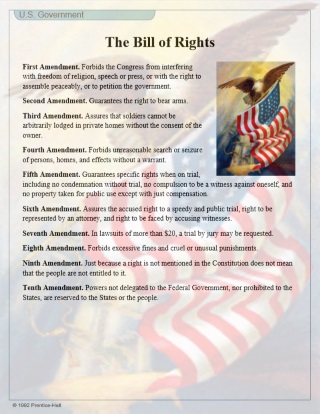
- Students will learn about the 14th Amendment.
- Students will review and analyze a Supreme Court brief.
Materials
Procedures
- Explain the background of the case.
Between 1842 and 1882, approximately 300,000 Chinese immigrated to America. These Chinese immigrants worked as railroad laborers, agricultural workers, and factory workers. Many opened up their own small businesses–such as bakeries, restaurants, and laundries. Unfortunately, there was much racism exhibited toward the Chinese immigrants by the European Americans; this came in the form of institutional racism and mob violence (many Chinese were lynched, their housing and businesses burned during the nineteenth century).
One important Chinese immigrant decided to fight back against this hatred. His name was Lee Yick and he ran a laundry named Yick Wo Laundry in San Francisco.
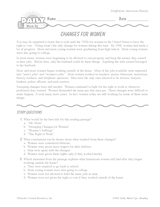
- After you read the above to your students, distribute the Yick Wo Facts handout.
- Discuss with the class how they think the U.S. Supreme Court ruled on this case.
- Ask them to hypothesize and write their ideas on the board.
- Hypothesize as to who you think won this case and what arguments the U.S. Supreme Court justices made to uphold their decision.
- After students have discussed their ideas, share this excerpt from the Supreme Court's decision.
"For no legitimate reason this body by its action has declared that it is lawful for 80-odd persons who are not subjects of China to wash clothes for hire in [wood] buildings, but unlawful for all subjects of China to do the same thing. . . . It was a law applied with an evil eye and an unequal hand. . . . The Fourteenth Amendment to the Constitution is not confined to the protection of citizens. (At the time, Chinese immigrants were not considered citizens.) It says, 'Nor shall any state deprive any person of life, liberty or property, without due process of law; nor deny to any person within its jurisdiction the equal protection of the laws.'"
- Ask students to write, in their own words, what the Supreme Court brief said.
- Questions to ask your students: What was their decision? What was their reasoning? Do you agree with the decision made by the U.S. Supreme Court on the case Yick Wo vs. Hopkins?
- Ask students to explain the reasoning for their opinions.
Excerpt from Ready-to-Use Multicultural Activities for the American History Classroom .