We all come from somewhere
Get Hooked on Your Family History
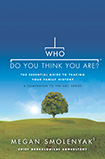
TeacherVision's sister site, FamilyEducation.com, recently spoke with Megan Smolenyak, the author of the book Who Do You Think You Are?, the companion to the NBC television series by the same name. Learn about the author and why she emphasizes genealogy as a worthwile family activity, and how you can cultivate your students' interest in the study of ancestry. Not only will they learn about their own families, but talking about genealogy is a great way to discuss families around the world.A sixth-grade family history project hooked Megan Smolenyak into the world of genealogy, and decades later, she's as captivated as ever.
"It's all Mrs. Berkowitz's fault!" said Smolenyak of the teacher who assigned the project. Smolenyak is now a professional genealogist and author of the book Who Do You Think You Are?: The Essential Guide to Tracing Your Family History. The book is a companion to the NBC television series Who Do You Think You Are?, featuring the genealogy journeys of celebrities including Sarah Jessica Parker, Susan Sarandon, and Spike Lee.
The show has spiked the public's interest in ancestry, showing that even celebrities have complex, mysterious, happy, and tragic family trees. Smolenyak said that actress Susan Sarandon's story – shared both in the book and on the show – is one of countless touching and intriguing genealogy stories she's heard. Sarandon was familiar with her Welsh heritage on her father's side, but knew little about her Italian relatives on her mother's side. She went about looking for clues on her maternal grandmother, who had disappeared when her mom was a child. "She had a mystery that was solved, literally," Smolenyak said of Sarandon's research. A genealogy hunt uncovered what Sarandon's mother never knew about her parents, and it connected her with cousins she never would have known.
Where to Begin
Many people get on the genealogy kick just like Smolenyak did – through a school assignment. She loves when teachers send students on these adventures.
"Genealogy makes both history and science more interesting to kids," she said. "It's a slippery slope. Once you get started finding things, you just keep going."
Smolenyak said DNA testing has added a new scientific dimension to genealogy, which teachers can tie into chemistry and biology lessons. The history piece of ancestry is obvious. A family may find out that a relative fought in the Civil War, and that suddenly makes history lessons on the war much more interesting for kids.
While the Internet has endless family history clues (Ancestry.com has more than 4 billion records, Smolenyak notes), she suggests taking these steps first:
Look at home. "Do a scavenger hunt in your house," she said. "A lot of us are sitting on family history and don't even know it. Go up in the attic or down in the basement. You might find a family bible with names written in the cover, certificates [for births, deaths, and marriages], or medals from a grandfather who fought in the war."
Talk with older relatives. "Talking with older people is one of the smartest things you can do. Older people are living libraries. Unfortunately, many people start too late. I can't tell you how many people tell me, 'If only I had [asked older relatives before they died].'"
Start with yourself. Begin by tracking and documenting this generation of your family using reliable sources, like government records, and then slowly backtrack one generation at a time. "A lot of people skip back several generations to someone famous or someone with the same last name," she said. " Census records are great family snapshots. Because they're done every 10 years, it makes it easy to march back in time."
Turn to the Internet to fill in holes and document what you know. Several sites offer family tree services, such as Ancestry.com, Geni.com, Genoom.com, MyHeritage.com, and WeRelate.org. You can even search for the origin of your family's name. The Web has forever changed genealogy, Smolenyak said. "What used to take a month to find out, you can now find in six hours. It's wonderful that now you can surf in your pj's at 2:00 in the morning and find things!"
When using the Web for your research, Smolenyak just advises being careful not to "take it as gospel." Always prioritize information you find with scanned documents and other sources over ones that have no sources. When you have information to add online or on paper, attach your sources to help relatives and future generations, she said.