
Assessment Advice & Forms
Recommended Assessment Advice & Forms Resources
-
ASSESSMENT
Pre-Reading Rubric and Score Sheet
-
ASSESSMENT
Exit Tickets for Elementary Classrooms
Exit tickets are a form of assessment that are often used informally as a check for understanding at the end of a lesson... -
ASSESSMENT
Exit Tickets for Middle School Classrooms
Exit tickets are a form of assessment that are often used informally to assess how well students grasped a lesson, what ... -
ASSESSMENT
Grading and Assessment Strategies
Find simple and effective grading and assessment ideas with this collection of tips and tricks. What's Included: Gui... -
ASSESSMENT
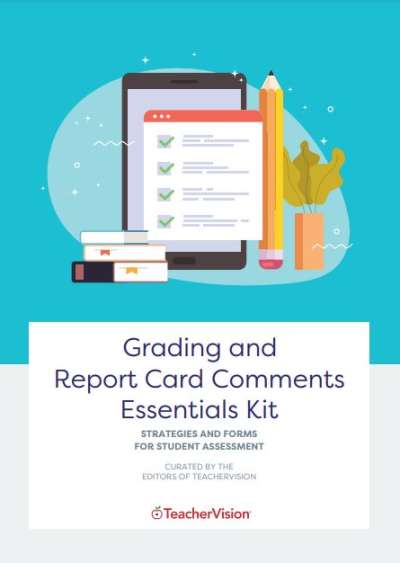
Grading Strategies and Report Card Comments Essentials Kit
Report card comments and grading strategies for teachers in every classroom - 90+ pages of grading comments examples, ti... -
WORKBOOKS
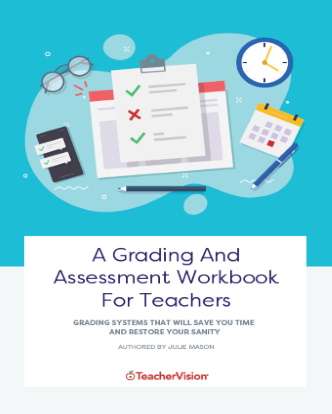
A Grading And Assessment Workbook For Teachers
TeacherVision contributor and instructional coach Julie Mason designed this workbook in order to share best practices fo... -

TEACHING RESOURCE
Using Multiple Intelligences in Testing & Assessment
Download for free! Information on using Howard Gardner's theory of multiple intelligences (MI) in student assessments i... -
TEACHING RESOURCE
Running Records
Download for free! How to use one of the most effective graphic organizers A running record is a way to assess a stude... -
TEACHING RESOURCE
Assessment vs. Evaluation: What's the Difference?
Successful teachers know the difference. Do you? Effective assessment of students is different from student evaluation.... -
GRAPHIC ORGANIZERS
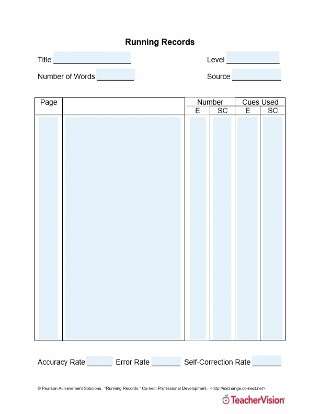
Running Records Form
Use this blank running record to assess individual students' reading skills and progress. Use with the lesson plan on R... -
WORKSHEETS
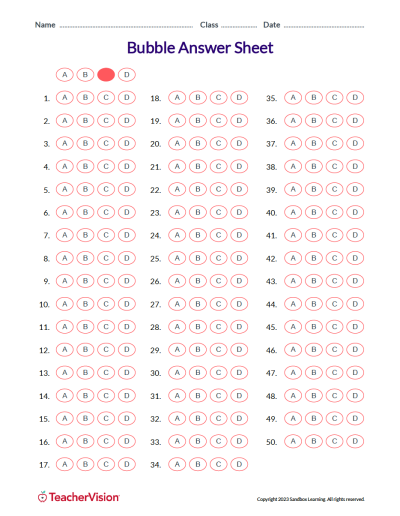
Bubble Answer Sheet
This sheet of multiple-choice bubble answers is ready to be filled in by your students. It features 50 items with bubble... -
TEACHING RESOURCE
Top 10 Test-Taking Tips for Students
Prepare your students for taking tests by helping them learn these strategies This resource will help students to perfo... -
WORKSHEETS
Student Progress Report
Save time with this flexible and ready-to-use student progress report template for reviewing student performance and att... -
WORKSHEETS
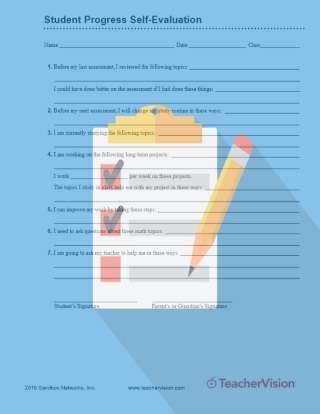
Student Progress Self-Evaluation
Covers homework, projects, self-assessment of needs Includes space for self-reflection Useful for RTI and IEP protoc... -
TEACHING RESOURCE
Creating Meaningful Performance Assessments
-
CLASSROOM TOOLS
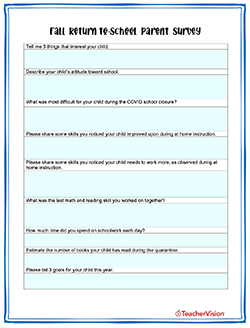
Editable Fall Return to School Parent Survey - Editable By Parent
This editable, 9-question back-to-school survey for parents will help you gather information about your prospective stud... -
CLASSROOM TOOLS
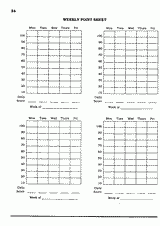
Weekly Point Chart
Four weeks' worth of point totals for tracking behavior management are in this printable chart. Use this system with stu... -
WORKSHEETS
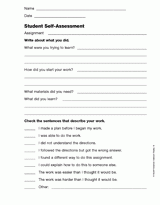
Student Self-Assessment 2
Use this assessment worksheet with your students to help them describe an assignment they had and what they learned. You... -
GRAPHIC ORGANIZERS
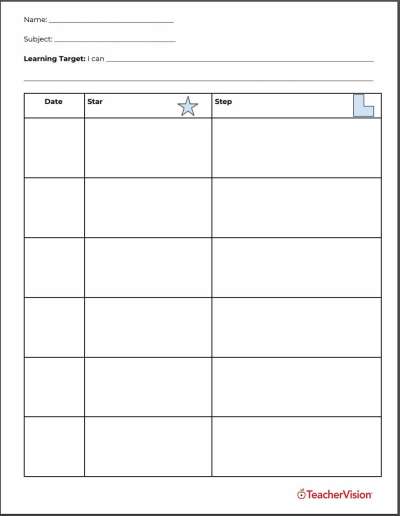
Stars and Steps Graphic Organizer
Use this graphic organizer to provide students with feedback on the learning target. There is a place to record a star,... -
WORKSHEETS
Student Self-Assessment 1
Use this assessment worksheet with your students to help them describe an assignment they had and what they learned. You... -
CLASSROOM TOOLS
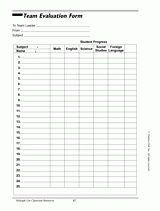
Team Evaluation Form
Evaluate student progress within a team and by subject area with this customizable form. Tailor the PDF to your teaching... -
ASSESSMENT
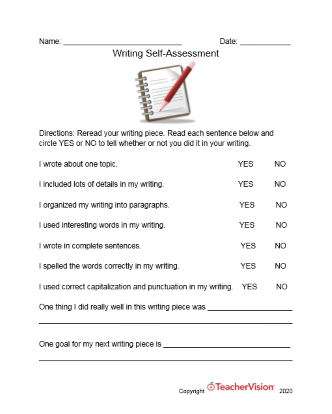
Self-Assessments Packet
Self-Assessments Packet Self-assessments are an effective way to help your students grow as learners. When they are a... -
GRAPHIC ORGANIZERS
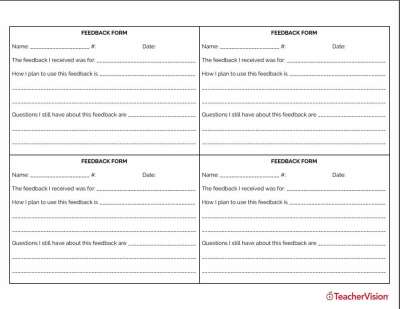
Student Feedback Form
Use this student feedback form to support students to read your feedback closely, identify any questions that they have,... -
CLASSROOM TOOLS
Group Self-Evaluation
Allow group members to evaluate their productivity during classroom activities. This is an excellent way to encourage s...


