Animal Adaptations Resources
![]() |
Introduce students to the study of ecological adaptation through lesson plans, worksheets, and group activities. Supplement your science unit with printable resources and projects that will help you teach students about the different ways in which animals adapt to their environment. Use these life-science materials to examine how organisms respond to predators, seasonal change, and other threats. Explore how migration, hibernation, and physical changes protect species and help them survive. |
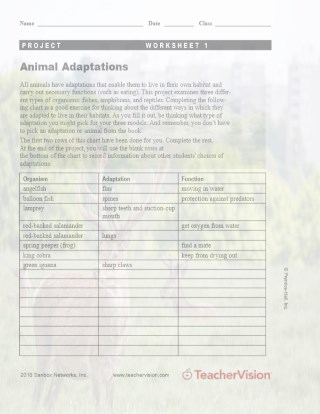
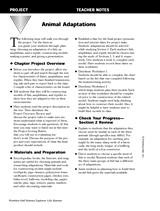
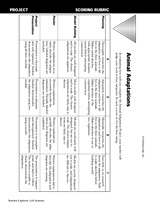
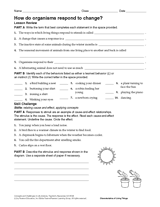
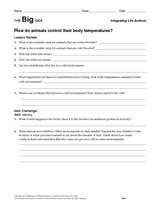
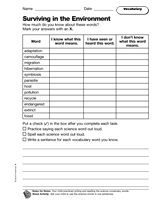
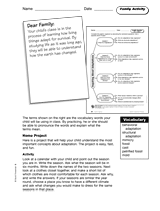
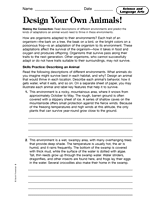
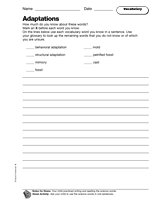
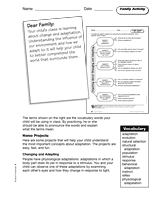
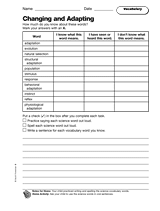
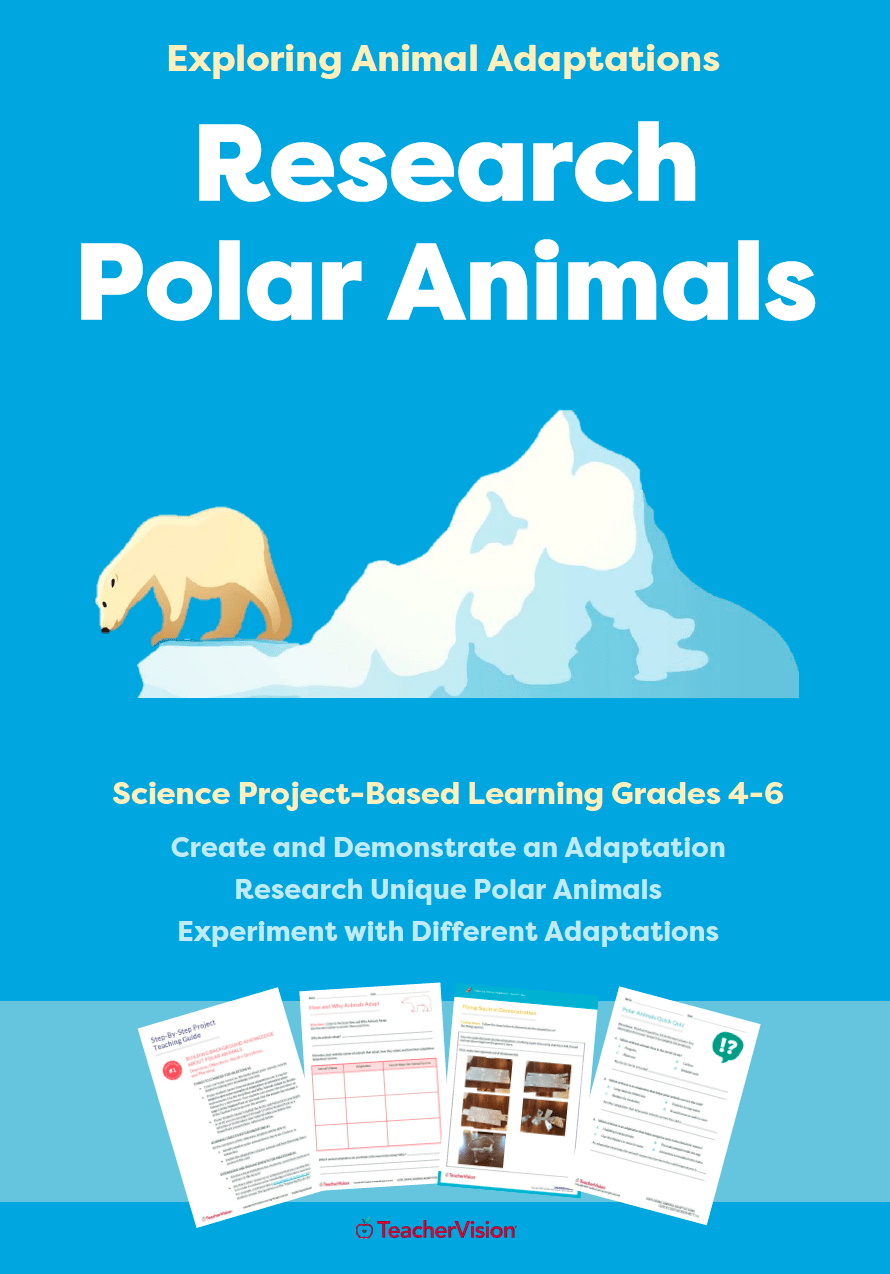
Lesson Plans & ActivitiesCompare and contrast human and animal adaptations. Use a lesson that shows why feathers are a remarkable example of animal adaptation. Children learn how animals adapt to cold environments with the help of their feathers. Children will construct their own feather and compare it with a real bird feather. This small group activity teaches students the important role color plays in animal adaptation. In this hands-on lesson, children learn how birds have adapted their beaks in order to successfully eat. Your child classify animals according to their mouth shape and parts, as well as the foods they eat. Human teeth are compared with animal teeth to teach children about this specific adaptation. In this activity younger children can imitate animal movements, while older students can play animal movement charades. In small groups, students make only movements while describing a certain object. Animals have different ways of adapting to seasonal change. In this lesson students will classify animals into three categories of adaptation: hibernate, migrate, and adapt. Present an activity that uses globes to show that some birds migrate east and west rather than north and south. Children design a bird using a variety of materials. This lesson is a great culminating activity on Animal Adaptation. Students make a mouth model to explore the feeding adaptations of different animals. Materials list, advance preparation instructions, lab hints and tips, safety tips, rubric, worksheets, and answer key are provided. Students explore how a moth's coloring protects it from being seen in its habitat. Materials list, rubric, worksheets, and answer key are provided. Suggest a family activity to parents that focuses on how living thing adapt for survival, and on vocabulary words related to adaptation. Suggest a family activity to parents that includes home projects and vocabulary words related to change and adaptation. | ProjectsA comprehensive set of notes to help you guide your students through this life-science project. In this project, students study how different organisms have adapted to their own environments. Children research and chart different organisms, their adaptations, and functions. After completing worksheet 1 of this project, students perform several tasks describing an adaptation of their choice. Give this rubric to students before they begin their animal adaptation project. Use it to evaluate the students' work in four categories: planning, model building, poster, and presentation. PrintablesDistribute a printable set of discussion questions on environmental adaptation. Use this list of vocabulary words when studying about adaptation. Distribute a printable set of vocabulary words associated with environments. Use this vocabulary list when studying about adaptation and change. Explore how animals adapt for survival in the wild with this printable teacher's guide for Animal Disguises. Extend elementary students' enjoyment of the book with activities that connect science, art, and language arts. Related ResourcesEducate students about animal behavior, biology, and habitats with our resources for grades K-12. Learn how to classify animals with lessons and printables on vertebrates and insects. Teach students about rain forest ecology with these lessons and printables for grades K-12. Browse our resources to find activities on tropical plants, wildlife, natural resources and more! Our lessons and printables on wildlife are perfect resources for National Wildlife Week. Bring the animal world into your classroom with activities on insects and mammals for grades K-12. |
Walden University
Wondering about online education at Walden? Get answers to your questions, meet faculty, and learn what it's like to be a Walden student. Click here to check out our free Walden Forums!
November Calendar of Events
Use our Educators' Calendar to find activities and printables for every day in November, including Geography Awareness Week (Nov. 15–21) and Thanksgiving (Nov. 26). Plus celebrate American Indian Heritage Month and Aviation History Month all November long!
Continuity of Learning
Is the flu causing you or your students to miss class? Pearson introduces www.PearsonContinuity.com to help keep the doors of learning open. This new website offers print and online resources for students, parents, and teachers to continue education if the H1N1 virus or another crisis keeps children from attending school.
Teaching The Diary of Anne Frank
PBS MASTERPIECE is airing a new film in the spring based on The Diary of Anne Frank, and, in conjunction with Facing History and Ourselves, the MASTERPIECE team will be creating resources to help educators introduce this timeless story to students. You're invited to share your ideas about what activities and tools you'd like to use in your classroom at the PBS Teachers blog!
Bulletin Boards
Improve effectiveness and enjoyment of lessons with our bulletin board ideas and examples. They'll make your classroom visually appealing and stimulating for your students.
Top-Ranked Educational Program—100% Online
Equip your faculty with today's best practices through an MS in Curriculum and Instruction or an MS in Educational Administration—100% online from The University of Scranton. Find out more!