The World of Rosemary Wells
- For Grades K - 2
- Language Arts
- Music, Art, and Drama
- Math
- Social Studies and Health
- About Rosemary Wells
- Rosemary Wells Books
- Buy this Book!
Enter promo code TEACH for 15% off.

INTRODUCTION
Who is the most amazing person in a child's life? What will a little girl do to capture her parents' attention? How might a child feel on the first day of school? In over 60 picture books, Rosemary Wells addresses universal childhood experiences with endless wit, humor, and good cheer. Ms. Wells' irresistible characters invite readers to explore their own feelings as they commiserate with each protagonist's plight and celebrate each triumph. Ms. Wells deftly weaves the themes of love, laughter, hope, and heroism into her spirited tales, enabling children to confront their fears with confidence and optimism.
How do you feel?
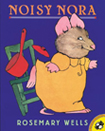
Timothy Goes to School, Noisy Nora, Shy Charles, Hazel's Amazing Mother, and Morris's Disappearing Bag are excellent titles to include in a unit about feelings. As you read these books, have the class create a list of feelings experienced by the main character in each book.
The Best of Times
After reading the three Voyage to the Bunny Planet books, have students describe the best day they can recall. Ask them to think about the small, simple encounters which made their day particularly enjoyable, just as cloud watching, tomato soup, and a card game brightened Robert, Claire, and Felix's day. Students should write about and illustrate their best day.
Family Fun
After reading Noisy Nora, ask students to develop a list of activities that their family members would enjoy doing together. Students might suggest ideas such as making cookies, going to a movie, visiting a museum, or riding bikes. Have students create for their family an invitation to participate in a day of family enjoyment in one or more of these activities.
Fantasy in Literature
Hazel's Amazing Mother provides an interesting opportunity to discuss the genre of fantasy. On a second reading of the book, stop at various points in the story to ask the students to distinguish between events that could and could not actually occur. Record the events on a two-column chart. While comparing and contrasting the two lists of events, introduce the concept of fantasy in literature.
I've got the Power
In Morris's Disappearing Bag, Morris is able to make himself invisible to others. Ask students to write about a special power they would like to possess, such as being able to fly or to shrink. Students must include both the advantages and disadvantages of possessing their particular power, and why they chose that particular power.
Heroes and Heroines
In Shy Charles, Charles is deemed a hero when he comes to the aid of his babysitter. Ask students to define heroism and to describe one of their heroes. Students should write a short composition about this person, explaining why she/he is heroic. Remind students that their hero or heroine can be an historical figure, a celebrity, a writer, a best friend, or even a family member (as in Hazel's Amazing Mother).
Treasure Box
After reading Max Cleans Up, discuss how Max tucks his belongings into his pocket as if they were treasures. Ask students to decorate a box with paint, glitter, sequins, and metallic paper. Then have them choose several "treasures" from home to place inside their treasure box and to show their classmates. When sharing, have students explain the personal significance of their treasures.
Talent Show
In Timothy Goes to School, Timothy and Violet are jealous of Claude and Grace, who seem to excel at everything. Ask students to share their own expertise with the class (e.g., jump-roping, singing, making cookies, bouncing a ball, or playing checkers). Help students discover and celebrate their strengths and interests with the class.
Noisemaker
Discuss the many ways in which Noisy Nora made noise in her home. Ask children to think about how they could construct a unique noisemaker or instrument using a variety of household objects. Students can design their instrument at home or bring their materials into school. Hold a "concert" in the classroom with these instruments.
Friendship Cards
After reading Timothy Goes to School, discuss ways to form new friendships. Then have students design a friendship card for a classmate that might include a compliment, a kind greeting, or an invitation to one's home. Provide materials such as sequins, tissue paper, or ribbon for creating unique and attractive cards. (Note: To ensure that each classmate receives a card, you might have students pick a classmate's name out of a basket.)
Holiday Hideaway
After reading Morris's Disappearing Bag, ask students to compose a holiday gift wish list. Then have them illustrate a cutaway picture of their home. Ask students to imagine places in their home where their parents might hide holiday presents. Have them draw the gifts from their list in these discreet locations, and then glue small paper flaps over the drawings to conceal the gifts. Students' parents will enjoy perusing their child's pictorial wish list, while learning where not to hide their child's gifts!
School Skits
After reading Timothy Goes to School, discuss Timothy and Violet's feelings about their school experiences. Then ask students to describe their own first day of school. Have students role-play different school situations and discuss the characters' feelings. Change the scenarios to have both a negative and positive outcome. (For example, how would the story have changed if Claude had been friendly to Timothy?) This book is, of course, ideal for reading on the first day of school.
Nifty Gifts
In Bunny Money, Max and Ruby have difficulty buying their grandmother a birthday gift. Have students suggest ideas for gifts they can make rather than purchase (e.g., a bookmark, a painting, or a placemat). Ask students to select an idea from the class list and create the gift for a friend or family member. (Note: This activity could be useful for a Mother's Day, Father's Day, or Grandparents' Day gift.)
Touch and Feel Books
After reading Goodnight Max, have students create their own "touch and feel" book. Provide them with materials such as felt, Velcro, fabric scraps, sandpaper, feathers, or cotton to incorporate many different textures into their book.